
JOB BLOG
Explore career opportunities from our network of recruiters--not some algorithm
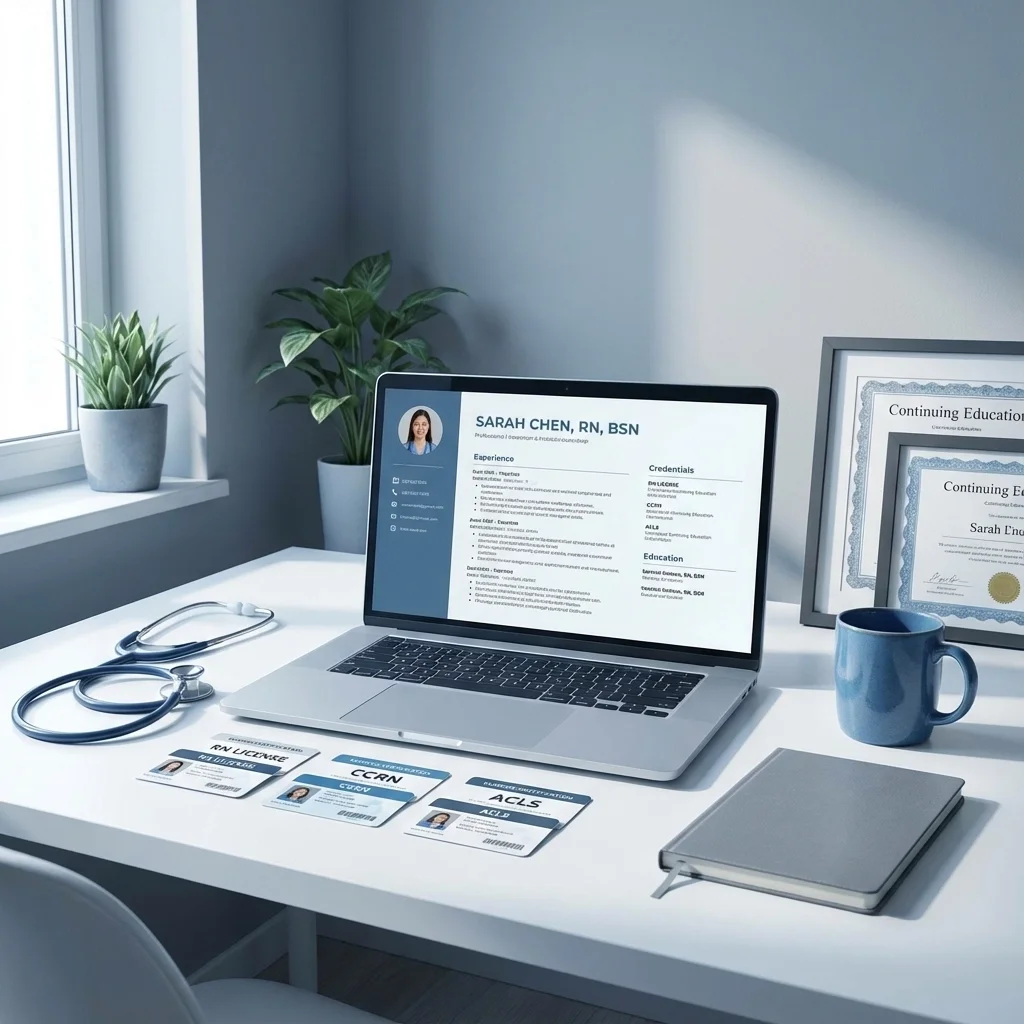
Why I'm Telling Experienced Nurses to Completely Rewrite Their Resumes for the Skills-Based Hiring Revolution
If you're an experienced RN still using the same resume format from five years ago, we need to talk. The healthcare hiring landscape has fundamentally shifted, and that traditional "duties and responsibilities" resume you've been tweaking might be sending your application straight to the digital graveyard.
After nearly three decades in healthcare recruiting, I'm seeing a seismic shift that's catching experienced nurses off guard. Hospitals, home health agencies, and healthcare systems are moving toward skills-based hiring: and if you don't understand what that means for your resume, you're going to get left behind.
The Problem: Your Experience Is Being Lost in Translation
Here's the harsh reality: traditional applicant tracking systems (ATS) are terrible at recognizing career progression. They freeze you at your application point, regardless of how much you've grown professionally. I've seen five-year nursing veterans receive recruitment messages targeted at new graduates because the system can't distinguish between a 2020 nursing school graduate and that same person's capabilities in 2025.
Think about it: an RN who graduated during COVID has lived through unprecedented challenges, developed crisis management skills, adapted to rapidly changing protocols, and likely gained expertise that would have taken years to develop under normal circumstances. But if their resume still looks like a basic job description list, none of that growth gets captured.
The old way of hiring focused heavily on where you worked and for how long. The new way? It's all about what you can actually do, right now, today. And that requires a completely different approach to how you present yourself on paper.
What Skills-Based Hiring Really Means for Experienced Nurses
Skills-based hiring isn't just a buzzword: it's a fundamental shift in how healthcare facilities evaluate candidates. Instead of scanning for specific job titles or years of experience, hiring managers are looking for evidence of specific competencies and capabilities.
This is actually good news for experienced nurses, but only if you know how to showcase your evolution properly. The nurse who's been doing med-surg for eight years isn't just someone with "eight years of med-surg experience": you're someone who's mastered complex medication administration, developed advanced patient assessment skills, handled diverse acuity levels, and likely trained newer staff members.
But here's the catch: you have to explicitly state these skills. The hiring manager and the ATS system aren't going to infer them from your job title.
The Four Pillars of a Skills-Based Nursing Resume
1. Technical and Digital Competencies
Healthcare technology has exploded, especially post-pandemic. If you're comfortable with Epic, Cerner, telehealth platforms, or any specialized equipment, list it specifically. Don't assume it's obvious.
Instead of: "Provided patient care using hospital systems"
Write: "Proficient in Epic EHR system, including medication administration records, care planning modules, and discharge coordination workflows"
The same goes for any AI-driven tools, monitoring equipment, or specialized software you've mastered. These aren't nice-to-haves anymore: they're differentiators.
2. Specialized Clinical Expertise
This is where experienced nurses can really shine, but you have to be specific about your patient populations and clinical areas. Generic phrases like "provided excellent patient care" tell hiring managers nothing.
Instead, think about:
What specific patient populations have you worked with? (Cardiac, oncology, pediatrics, geriatrics, post-surgical, etc.)
What procedures are you comfortable with independently?
What emergency situations have you handled?
What quality improvement initiatives have you been part of?
3. Measurable Impact and Leadership
This is where most experienced nurses sell themselves short. You've probably trained new graduates, mentored nursing students, served on committees, or implemented process improvements. These experiences demonstrate leadership and impact: but only if you quantify them.
Examples:
"Mentored 12 new graduate nurses over 18 months, with 100% retention rate"
"Reduced medication errors on unit by 30% through implementation of double-check protocols"
"Led interdisciplinary team that decreased average length of stay by 0.8 days"
4. Continuing Education and Certifications
The days of relying solely on your original nursing degree are over. Healthcare moves too fast. Hiring managers want to see evidence that you're staying current.
List everything recent:
Specialty certifications (BLS, ACLS, PALS, specialty nursing certifications)
Continuing education courses
Professional development workshops
Any additional training or credentials you've earned
Don't just list them: explain how they've enhanced your practice when relevant.
Common Resume Mistakes That Kill Your Chances
The Generic Job Description Copy-Paste: If your resume reads like you copied and pasted from a job posting, you're not showcasing your unique value. Every nurse has "provided patient care" and "maintained patient safety." What did YOU specifically do?
Chronological Thinking: Organizing your resume purely by dates worked doesn't tell the skills story. Consider a hybrid format that leads with your core competencies and then supports them with specific examples from your work history.
Underselling Soft Skills: Leadership, communication, critical thinking, and adaptability are hugely important in healthcare, but you need to provide concrete examples. Don't just say you're a "team player": describe how you collaborated during a code situation or coordinated care across multiple departments.
The Modern Nursing Resume Structure That Works
Professional Summary: Start with 3-4 lines that capture your years of experience, key specializations, and top skills. Think of this as your elevator pitch.
Core Competencies: Create a section that lists your key clinical and technical skills. This helps both human reviewers and ATS systems quickly identify your capabilities.
Professional Experience: For each role, include 2-3 measurable accomplishments that demonstrate impact, not just duties performed.
Certifications and Education: List these prominently, with dates of completion or renewal.
Additional Skills: Include any languages spoken, volunteer experience, or special training that could be relevant.
Making the Transition: Practical Next Steps
If you're feeling overwhelmed by the idea of rewriting your entire resume, start small. Pull out your current resume and ask yourself:
Where can I add specific skills or technologies?
What accomplishments can I quantify?
What recent training or development have I completed?
How have I grown beyond my original job description?
Remember, you're not starting from scratch: you're translating your existing experience into the language that modern hiring systems understand.
The goal isn't to make your resume longer; it's to make it more specific and more compelling. Every line should either demonstrate a skill, show measurable impact, or prove ongoing professional development.
Why This Matters More Than Ever
Healthcare facilities are dealing with staffing shortages, increasing complexity, and evolving patient needs. They can't afford to miss qualified candidates because of outdated hiring processes, and they can't afford to hire the wrong people because job descriptions were too vague.
Skills-based hiring is their solution: and it should be yours too. When you clearly articulate what you can do, you make it easy for the right opportunities to find you.
The experienced nurses who understand this shift and adapt their approach are the ones who'll have their pick of the best opportunities. The ones who stick with outdated resume formats will find themselves increasingly overlooked, despite their valuable experience.
Your Next Move
The skills-based hiring revolution isn't coming: it's here. And as an experienced nurse, you have incredible value to offer, but only if you know how to present it properly in today's market.
If you're ready to translate your experience into the language that modern healthcare hiring speaks, don't go it alone. At Great Bay Staffing, we understand both the clinical side and the hiring side of healthcare. We can help you position your experience for maximum impact in today's skills-focused market.
Because in a world full of AI screening tools and automated systems, sometimes you need real people who understand the real value of your real experience. That's what we do: and that's how we help experienced nurses like you find the opportunities you've earned.